

Someone sends you “dwu” and you stare at the screen. Is it an acronym, a typo, or new slang? This guide explains what DWU most likely means, where it comes from, and how to reply without an awkward misread.
Quick Answer Box
DWU most likely means “don’t worry, you” or “don’t worry about you.” It is a casual way to reassure someone, usually written as “dw u.” It is not a formally recognized slang term, so the meaning depends on the sender and the conversation.
| Item | Detail |
| Most likely meaning | DW (don’t worry) + U (you) |
| Tone | Reassuring, casual, friendly |
| Common platforms | WhatsApp, Instagram DMs, Snapchat, iMessage |
| Best response | “Thanks!” or “Okay, got it” |
| Reliability | Informal and context dependent |
What Does DWU Mean in Text?
DWU is a shortened chat phrase. Texters drop spaces and letters to type faster, so “dw u” becomes “dwu.”
The two most plausible readings are:
- “Don’t worry, you’re fine.” The sender calms you down.
- “Don’t worry about you.” The sender says you are not the problem.
A third possibility is a plain typo, such as a mistyped “dw” or “dwi.” That is why you should always read the surrounding messages.
Origin and Evolution of DWU
“DW” has been common since the early days of SMS, when every character counted. As messaging apps grew, people started attaching “u” to shorthand, as in “thx u,” “luv u,” and “dw u.”
DWU is a product of that habit. No single person or platform created it. It spread informally, which is why no dictionary gives one official definition.
Psychological and Emotional Meaning of DWU
When someone writes “dw u,” they usually want to lower tension. The phrase signals care without a long explanation.
It often carries these emotional layers:
- Reassurance: “You didn’t do anything wrong.”
- Warmth: “I’m not upset with you.”
- Low pressure: “Take your time.”
Because it is so short, it can also feel casual or dismissive if the topic is serious. Tone matters.
Communication Function of DWU
DWU does three jobs in a conversation:
- Softens a delay (“Sorry I’m late.” “dw u”)
- Closes a small worry without further discussion
- Keeps the chat light and friendly
It works as a social cushion. It is quick, and it signals goodwill.
Cultural and Generational Context of DWU
Younger users, especially Gen Z, shorten almost everything. Older texters tend to write “don’t worry” in full or use “dw” alone.
Regional habits matter too. In British, Indian, and Pakistani English chat, “dw” and “dw yaar” are everyday phrases, and “u” for “you” is standard. In many of those chats, “dwu” simply reads as a quick comfort line.
What Is DW Mean in Text?
DW means “don’t worry.” It is the base of DWU and the more widely recognized abbreviation.
It can also mean “dear wife” in family contexts, or “darling wife,” but “don’t worry” is by far the most common use. When you see “dw” in a normal chat, assume it is reassurance.
Why DWU Became Popular
Three things helped it spread:
- Speed: Fewer keystrokes than “don’t worry about you”
- Tone: It sounds friendlier than a flat “ok”
- Habit: People already used “u” for “you,” so the pattern felt natural
Semantic Core Meaning of DWU
The core idea is simple: comfort directed at the reader. Strip away the shorthand and the message says, “You’re okay.”
That is why DWU rarely appears in arguments or formal writing. It belongs to friendly, low stakes exchanges.
Most Common DWU Meaning in Text (Deep Dive)
The reading with the most support is “don’t worry, you”, used in phrases like:
- “dw u, I’ll handle it”
- “dwu it’s fine”
- “dw u, no rush”
The “u” can act as a target (“don’t worry, you”) or point to a person (“don’t worry about you”). Either way, the emotion is the same: calm and care.
Meaning Based on Context
| Context | Likely meaning | Example |
| Apology reply | “It’s okay” | “Sorry for the delay.” “dwu” |
| Plans changing | “No problem” | “Can’t make it tonight.” “dwu, next time” |
| Worried friend | “Relax” | “I failed the quiz.” “dwu, you’ll pass next one” |
| Typo possibility | Unclear | “dwu” with no prior message |
What Does DWU Mean in a Text From a Girl?
Usually the same thing: “don’t worry, it’s okay.” From a friend, it is plain kindness. From someone you are dating, it can carry extra warmth.
Do not read romance into it by itself. Look at the whole conversation, including emojis, response speed, and her usual style. A heart or a smiley suggests affection. A short “dwu.” after a tense message may mean she is brushing it off.
How DWU Is Used in Real Conversations
Example 1: Running late You: “Stuck in traffic, sorry!” Friend: “dw u, we haven’t started.”
Example 2: Forgot something You: “I forgot your charger.” Friend: “dwu, I have another.”
Example 3: Nervous before an exam You: “I’m so scared.” Friend: “dwu, you studied hard.”
ALSO READ THIS: LYK Meaning in Text: What Does LYK Mean and How to Use It?
DWU Meaning on Different Platforms
| Platform | Typical use |
| Casual reassurance between friends and family | |
| Instagram DMs | Quick, friendly replies |
| Snapchat | Fast, lowercase, often with emojis |
| iMessage/SMS | Short comfort line |
| Discord/Gaming | May be a typo or an inside joke |
When to Use vs. When to Avoid DWU
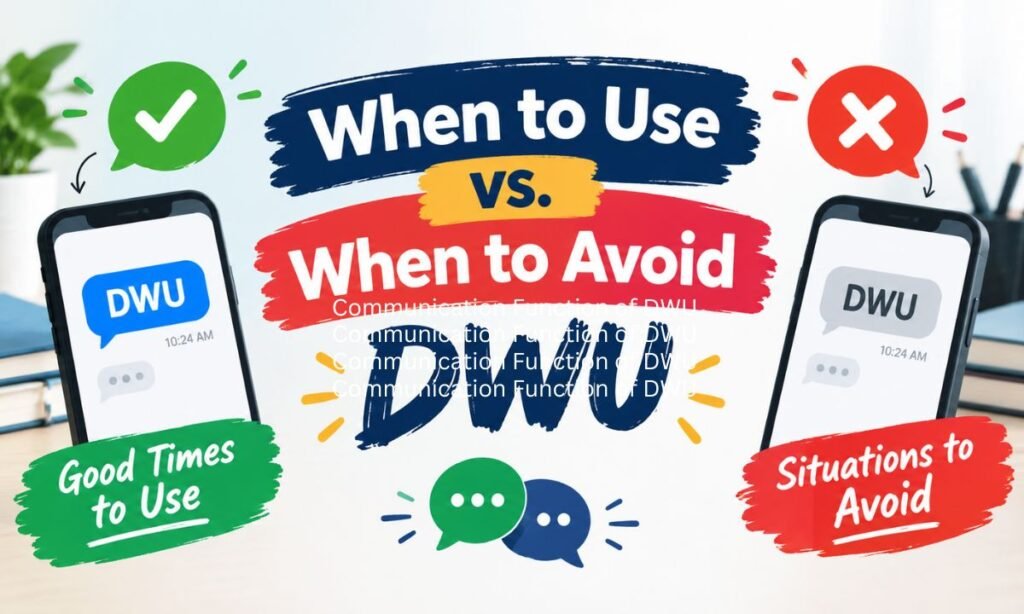
Use it when:
- Talking with friends or close contacts
- The issue is small
- You want a relaxed tone
Avoid it when:
- Writing to a boss, teacher, or client
- Someone is genuinely upset or grieving
- The topic is serious, such as health or money
Hidden or Risky Meanings of DWU
DWU has no widely recorded offensive meaning, but there are real risks:
- Misreading tone: A cold “dwu.” can feel dismissive.
- Ambiguity: Some people may take it as a different acronym.
- Scam or spam messages: If an unknown number sends only “dwu” with a link, do not click. Strangers sometimes use vague texts to start a conversation.
If you do not know the sender, ask before you engage.
Variations and Forms of DWU
- dw u
- dwu
- dw you
- dw about u
- dwy (a typo variant)
- dw 😊 (with emoji for warmth)
DWU vs. Similar Slang
| Slang | Meaning | Difference |
| DW | Don’t worry | Shorter, more common |
| NP | No problem | Responds to thanks or apologies |
| NVM | Never mind | Drops the topic |
| IDC | I don’t care | Colder in tone |
| YW | You’re welcome | Answers thanks only |
DWU is gentler than “idc” and more personal than “np.”
How to Decode the Correct Meaning
- Read the previous message. Reassurance fits apologies and worries.
- Check the sender. A close friend uses it differently than a stranger.
- Look at punctuation and emojis. They set the tone.
- Consider a typo. A single “dwu” with no context may be one.
- Ask. “Do you mean ‘don’t worry’?” costs nothing.
How to Respond to DWU
- Casual: “Thanks, appreciate it!”
- Warm: “You’re the best 😊”
- Neutral: “Okay, cool.”
- If unsure: “Sorry, what do you mean by dwu?”
Keep it short. A reassurance does not need a long reply.
Common Misunderstandings About DWU
- “It’s an official acronym.” It is not. No major dictionary lists one fixed meaning.
- “It always means romantic interest.” It does not. It is usually just kindness.
- “Every website explains it correctly.” Many pages online invent meanings with no source, so be careful where you read.
- “It means ‘do what you…'” Some pages claim this, but there is no real evidence of that usage in normal chats.
Regional and Cultural Usage of DWU
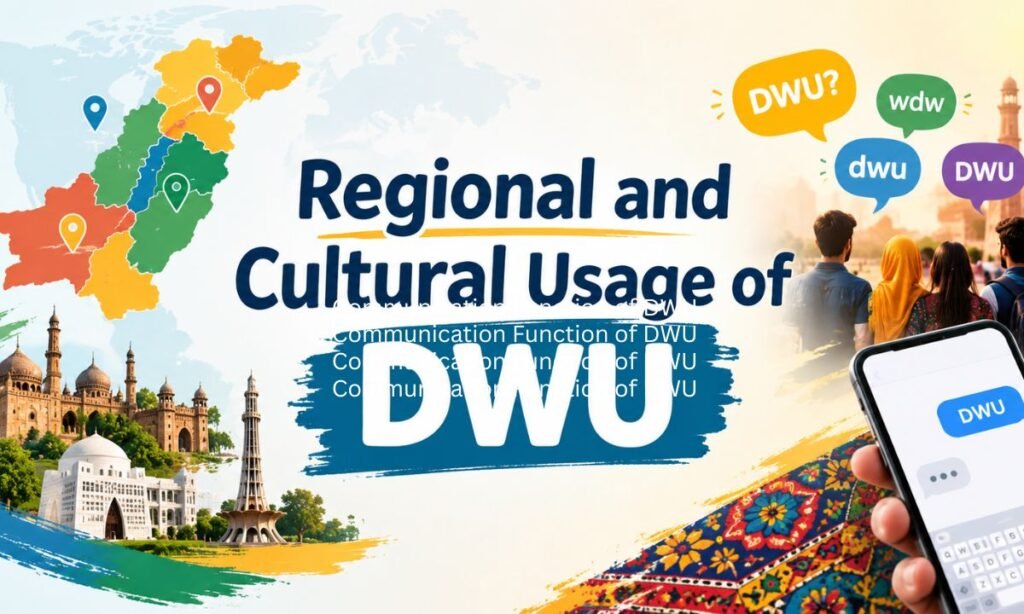
In South Asia, the UK, and parts of Africa, “dw” appears often in everyday messaging. Users mix it with local words (“dw yaar,” “dw bro”). In the US, “no worries” and “np” are more common, so “dwu” may seem unfamiliar there.
Frequently Asked Questions
What does DWU stand for?
It most likely stands for “don’t worry, you” or “don’t worry about you.”
Is DWU a real slang term?
It is informal chat shorthand rather than an officially recognized slang word.
Is DWU flirty?
Not by itself. It is usually friendly reassurance, so judge by the rest of the conversation.
Can DWU be a typo?
Yes. If it appears with no context, ask the sender what they meant.
How is DWU different from DW?
DW means “don’t worry,” while DWU adds “you” and aims the comfort at the reader.
Should I use DWU at work?
No. Write “no worries” or “don’t worry” in professional messages.
Is it safe to reply to an unknown number that sends DWU?
Be careful. Do not click links or share details until you know who it is.
Conclusion
DWU most likely means “don’t worry, you,” a quick, friendly way to reassure someone. It is not an official term, so context is your best guide. Check the earlier messages, consider who sent it, and ask if you are unsure. Use it with friends, skip it in formal settings, and treat any website that claims a single “official” meaning with caution.
